
Automorphic forms, strings, supersymmetries…
the bits-and-bytes of an archetype
Background. The word, archetype, was first noted in print around 1540. It conveyed the meaning: the original pattern or model. From Latin, archetypum, and Greek, arkhetypon, it was then used for the pattern, figure or seal. It evolved to include a pattern of behavior or.prototype or first form as in the Platonic concept of pure form.
Our use of the word may be a bit like Plato’s theory of forms; but, because we we are exploring Langlands theory of forms, automorphic forms, as functional representations (along with other studies not yet on the grid), we will be redefining the word for our time.
Approximations. Also, whereas Carl Jung’s concept of an inherited unconscious predisposition, behavioral trait or tendency, is useful when considering human consciousness and Platonic archetypes are useful as “ideas, paradigms, or models, here within our website — https://81018.com/ — we look at it in terms of notations and (0 – 10) forms, (11-20) structures, (21-30) substance, (31-40), qualities, (41-50) relations, and (51-60) systems. We followed a simple logic for what seems most-simple to what seems most-complex.
Though arbitrary, we have assigned ten notations to each group just to have a generalization that we could modify and adjust with new insights. For us, these are the domains of our most primitive archetypes well before the first second of creation within Notation-143. Yet, we know there is nothing primitive about them. There is so much complexity in the most- simplest sphere.
Artificial Intelligence. Grok, and ChatGPT were the first to analyze the model. Perplexity did a generic analysis because we asked it what it knew about the Qualitative Expansion Model. I am confident most AI platforms available to the public today would do about the same. So, now we are asking the AI community to get further involved and to run tests. It is all in the algorithms, especially the finite-infinite relation found within the four most-used irrational numbers, π-e-√2-φ.
In what ways can we related them to the actual numbers for symmetry and symmetry-breaking, and for the various transformations within the Fourier transform?

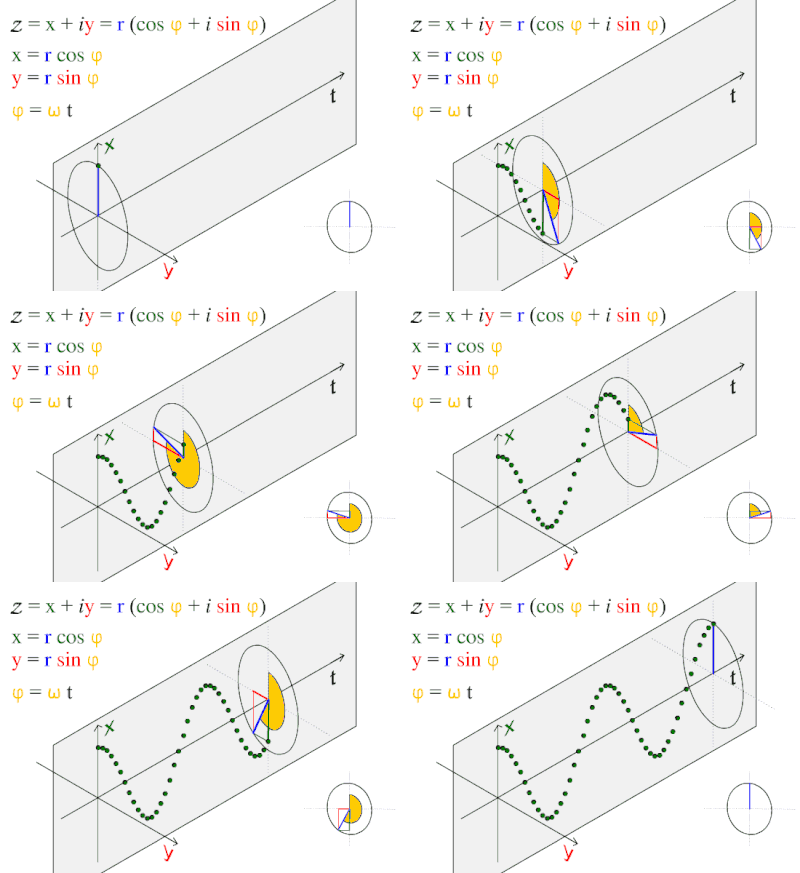
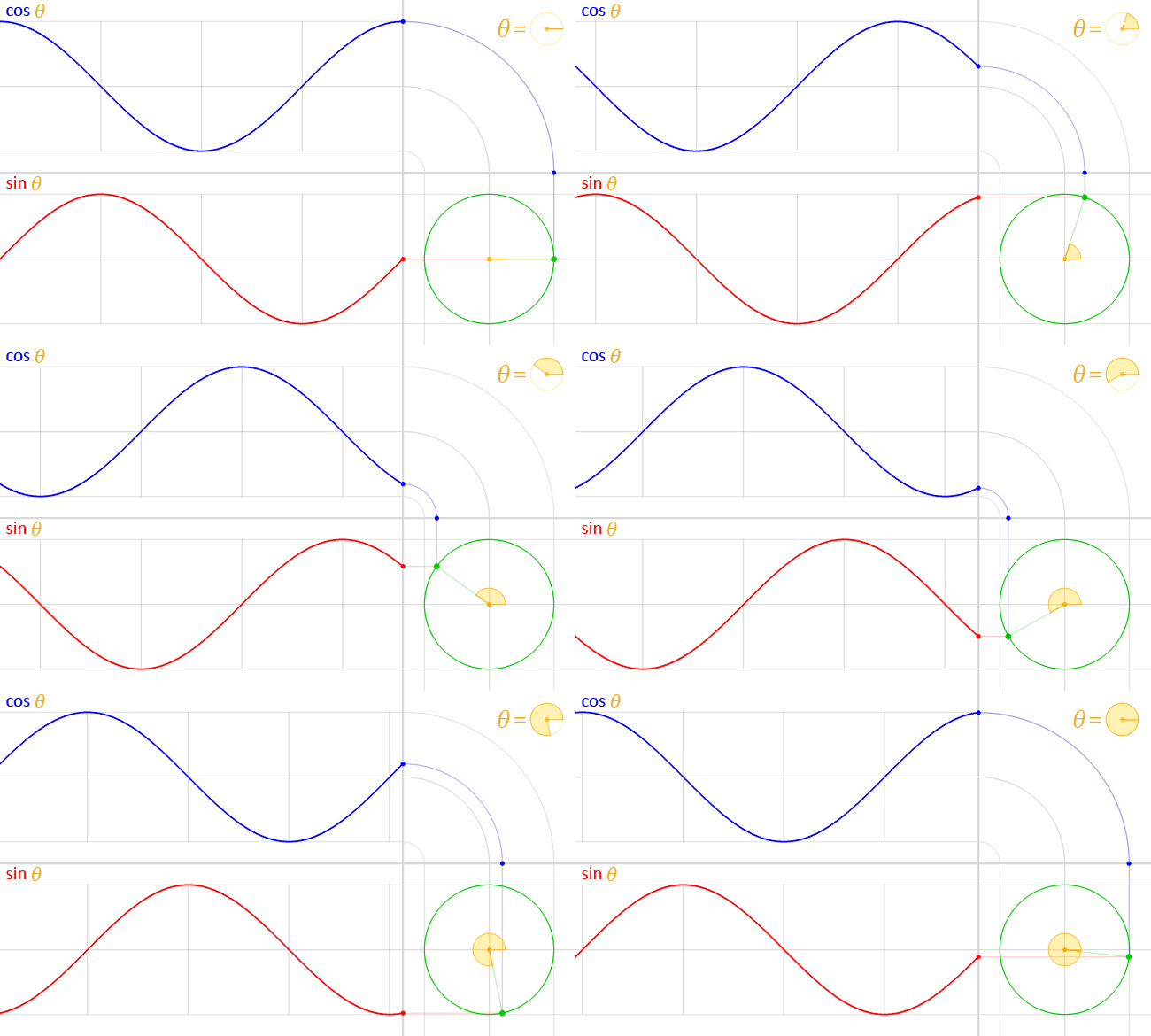
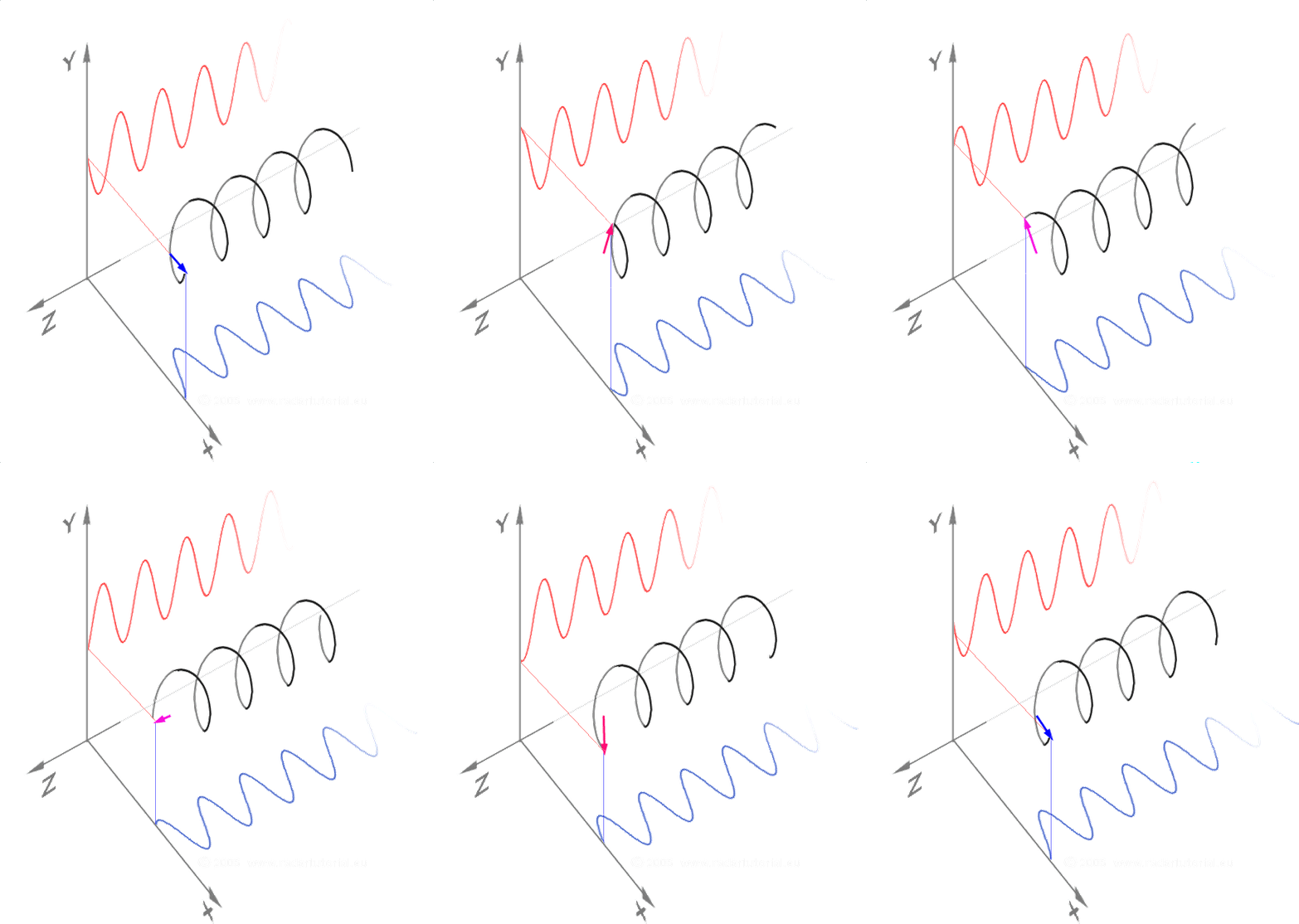

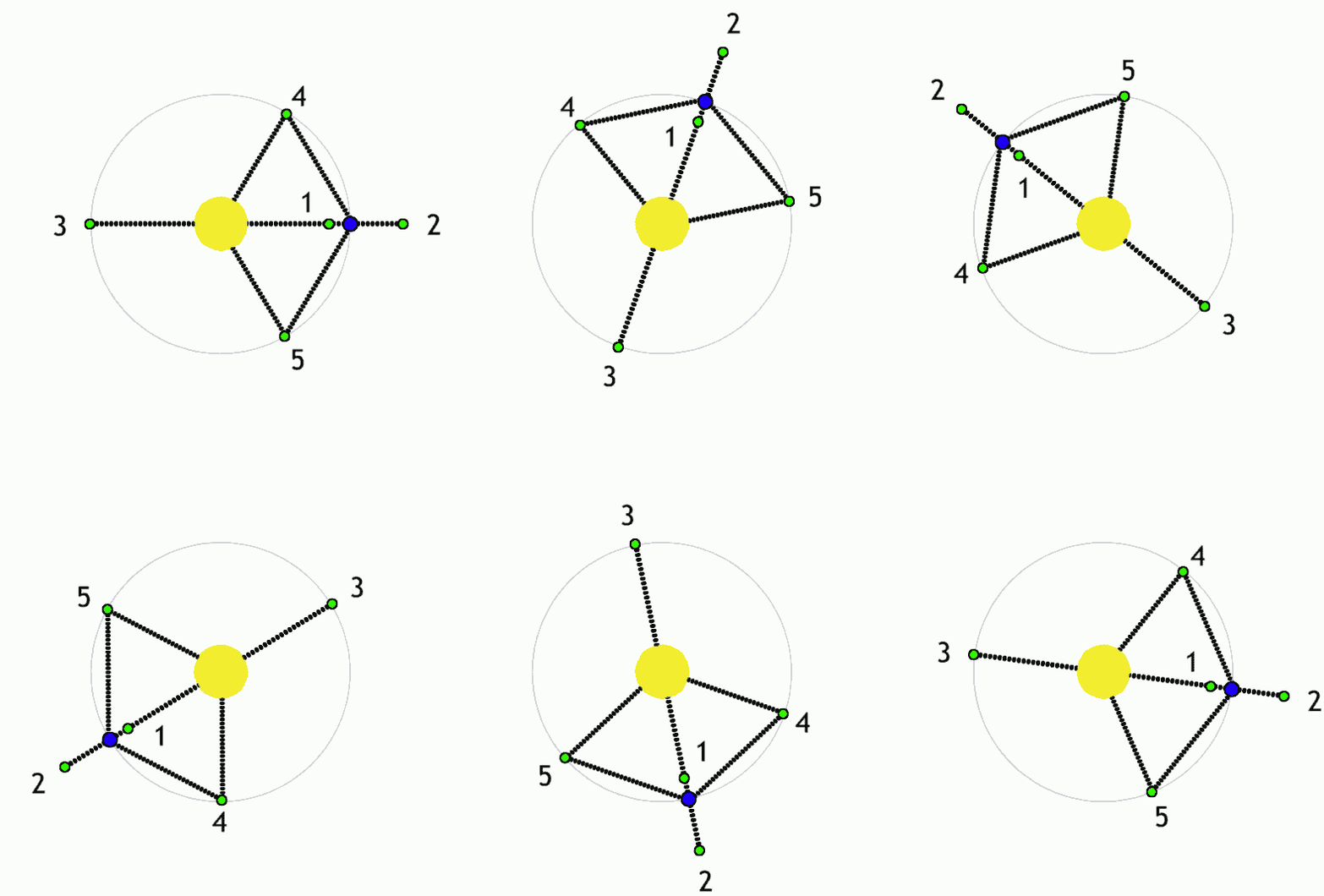
From perfection to imperfection. When and where that first gap manifests is an open question. The domain of the archetypal, where there is a thrust for perfection, it conceivably could go on for a year (Notation-169), perhaps 1000 years (Notation-179). We don’t know, however, at some point five tetrahedrons will share a common edge, a simple fluctuation begins, systems engage, and fluctuations become part of our universe. Our guess, perhaps just whimsical speculation, is that the first manifestation of some kind of fluctuation is where the homeostasis with the internal-and-external activities within the sphere become out-of-balance. Once established as a system within space-time, conceivably it moves back down into the earlier notations until the thrust for perfection doesn’t allow room for a fluctuation. At this point in our thinking, it seems that the domain of perfection would go from Notation-1 to about Notation-50 where we hypothesize the beginning of Systems and the archetypes for the Mind. Here we finally begin to see an infinite diversity of possibility within those five dynamics pictured above. Here, probabilities can be exploring the easiest possibilities.
With every new second within each notation, new layers of inter-connectivities emerge. Instead of just continuity, symmetry and harmony, the formulas are extended:
1. The infinite is continuity and it begets order, begets numbers which begets time.
2. The infinite is symmetry and it begets relations which beget geometries which beget space.
3. The infinite is harmony and it begets dynamics begets Systems begets space-time.
Thank you. –BEC
###