
CENTER FOR PERFECTION STUDIES: CONTINUITY•SYMMETRY•HARMONY GOALS January 2021
PAGES:.ALTERNATIVE | DARK | CONFERENCE | MISTAKES | PHILOSOPHY | RELATIONS | TIME | UP
KEY POSTS: CLAIMS | ENDNOTES-FOOTNOTES | REFERENCES | EMAILS | TWEETS | Zzzzs
Is All Dark Matter-Energy at the core of planets, stars, and galaxies?*
Background of this Key Question: A series of peer-reviewed articles by Dr. Alexander Kusenko (Kavli Institute for the Physics and Mathematics of the Universe and the University of California, Los Angeles) and then a series of popular articles has led to renewed speculations about the very nature of blackholes. As well, the Kusenko work has raised questions about the start of the universe, yet it is used within this website as a pivot to planets, stars, and galaxies.
Quick Question: Why is an infinitely-hot start of the universe necessary when it gets hot enough with a very cold start in less than a second? Look at the numbers: http://81018.com/calculations/
Quick Answer: The Hawking model is not necessary.
1. Hypothesize that the Planck base units as the first instant of time.
2. Hypothesize that the units define a primordial sphere.
3. Hypothesize that base-2 captures the expansion of Planck’s numbers.
4. Do the math. There are over 18.5 tredecillion spheres per second.
5. Hypothesize that this is a cosmological constant and the expansion of the universe.
6. Hypothesize that the dynamics of sphere stacking and cubic-close packing of equal spheres: https://81018.com/ccp/ It is natural inflation (doublings).
7. The first 64 doublings (aka notations) are below the thresholds of length measurement by CERN. The first measurement of a unit of time isn’t until the zeptosecond at notation 74-77 — https://81018.com/a84/ — at the Garching MPI.
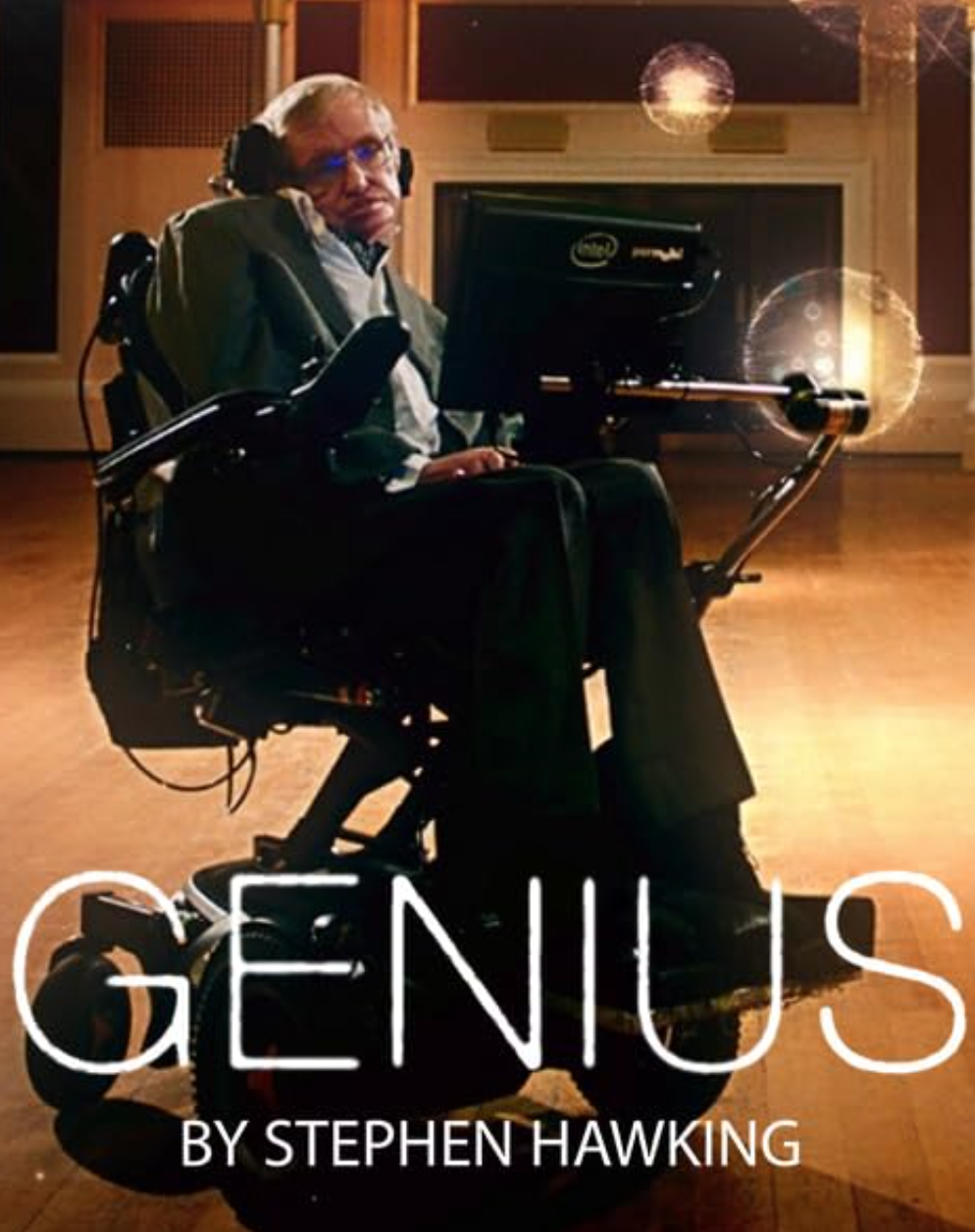
8. Hypothesis: This is our dark energy and dark matter: https://81018.com/dark/
- * Sci-News, by the editors, Dec 28, 2020
- Alexander Kusenko et al. 2020. Exploring Primordial Black Holes from the Multiverse with Optical Telescopes. Phys. Rev. Lett 125 (18): 181304; doi: 10.1103, 30 October 2020 ArXiv, 2020
###