
Leonard Mlodinow, Los Angeles and Caltech, Pasadena
ArXiv (8):
1. Discrete spacetime, quantum walks and relativistic wave equations, 2018 with Todd A. Brun
2. Detection of discrete spacetime by matter interferometry, with Todd A. Brun
More to come…
Books (very small sampling)
1. The Grand Design with Stephen Hawking
2. Beyond the Horizon (Editor’s note: Mlodinow wrote the screenplay for Heinlein’s book)
3. Feynman’s Rainbow: a search for beauty in physics and in life
4. Euclid’s Window: The Story of Geometry from Parallel Lines to Hyperspace and many more
Homepage(s): Biography, X (Twitter), Wikipedia
Second and most recent email: 28 August 2024
Hi Leonard:
Questions: What are the first numbers of the universe? …the first equation of the universe? Did it exist within infinity first? …the most simple object in the universe?
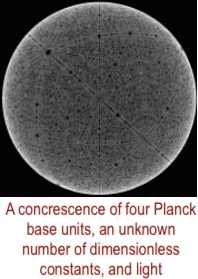
If the most simple building block is a sphere and the Planck base units (or their ISO equivalents) define them, it is a huge domain between the Planck scale and the CERN scale. If we apply base-2 notation to the Planck scale numbers, there are 202 notations. The infinitesimal scale is therefore about 67 notations. It is Langlands programs and M-theory goldmine. It gives credibility to other disciplines not on the grid: https://81018.com/reformatting/#List Also: https://81018.com/functional-analysis/
Idiotic?
Thanks.
Sincerely,
Bruce
First email: Friday, September 03, 2010 @ 12:17 PM
Dear Prof. Dr. Leonard Mlodinow,
Not having the advantage of an advance copy, but following your Cambridge friend since the early ‘70s and enjoying his cooperation with our Schrödinger What is Life? tribute in 1979 at MIT, your collective work is somewhat known to me.
I have some simple-albeit-unusual questions for you about basic structure, and then a comment about metaphor.
The foundations, first principles of logic and life, begin with some ordering condition that creates continuity. We are able to measure. There is quantitative analysis. A science can emerge. A space is defined. Push the points and lines into three dimensions and an equals sign readily emerges. Relations are possible and can be quantitatively defined. Continuity equations now lead to symmetry equations.
Bear with me please.
Introduce duration and symmetries render all the diversity and complexity we know. Some of these dynamics are actually perfected in various manifestations of harmony. That is a simple overview of quantities.
With harmony, however, within the human condition, something rather special happens. We begin to have qualitative analysis. Numbers take on special meaning. There is interiority. Then, comes logic, linguistics, and a psychology and all the other expressions of humanity. Among those expressions are folks who think about universals. Put those in quantitative language and you have science, put them in qualitative language and you have personal dynamics, business, religion and the arts.
Too simple? I don’t think so.
Though not highly regarded by some, I enjoyed the friendship of David Bohm who encouraged us in a class to spend some time thinking about points, lines, triangles and tetrahedrons. When Bohm died in 1992, I took down his book, Fragmentation and Wholeness, that he had given to me as his guest in his class. After reading just a few pages, I thought, “Why did we not ask what is inside the tetrahedron?” I made a simple paper model.
For over a century, most discussions about simple geometries are not encouraged. As a result, most academics and practitioners of science could not answer the simple question, “What is perfectly enclosed within the tetrahedron?” School children should be able to quickly answer. At the center of the tetrahedron is the octahedron which poses an even more difficult challenge for most. Again the kids should know better. At Princeton a few years ago, I asked the surreal numbers man, John Conway (a good gaming guy), the question. He bought some time by asking me why I was so hung up on the interior structure of the octahedron. Then he said, “Let’s figure it out,” and of course, he did. Though a few of Bucky Fuller’s people could have answered the question, very few can.
And therein lies answers beyond our wildest dreams. The simplest interior structure of the octahedron is not simple at all. And, therein is not only the GUT, the TOE and a few TOES as well, there is more. This is what is. It is pure thought and for some reason, that exploration , if we prevail, is just about to explode. We’ll finally get to see the cohesiveness of knowledge, all of knowledge. Make it personal, twist a few metaphors within it, and you can get a lot of God talk. Keep it abstract and quantitative, and you have a science.
I know that you didn’t ask, but I thought you might enjoy a slightly different twist on our mutually-shared views of our universe.
Thank you.
Best wishes,
-Bruce